DEIA--A Critical Framework for Inclusion
What’s missing from DEI? Accessibility. We propose that “DEI” become “DEIA,” with the “A” for “accessibility.” This isn’t cosmetic branding; it’s an overdue acknowledgment of the largest national and global minority—disabled people—and of how consistently our community is overlooked even by well-intentioned social justice efforts.
There are over 70 million disabled adults in the U.S. according to the CDC. Disability is intersectional—it exists in every demographic, cutting across race, gender, income, geography, and identity. Many DEI concerns are, at their root, about accessibility and ableism: the idea that society has a standard, and anyone who deviates from it is less valuable or not worthy of inclusion.
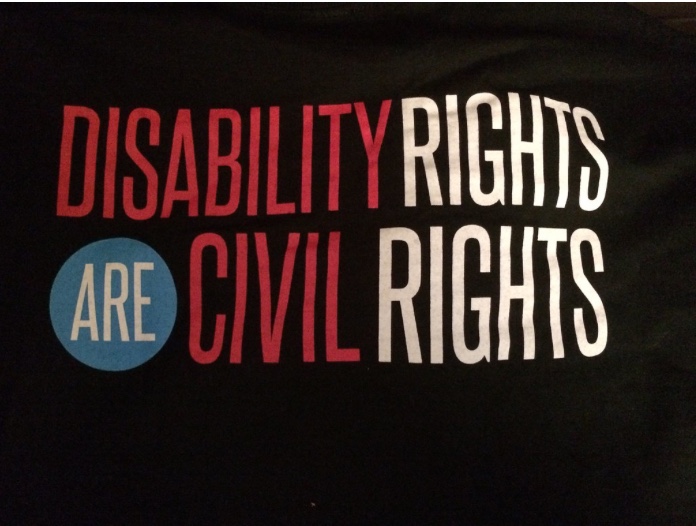
Nonetheless, disability rights are governed by some of the weakest civil rights protections on the books. Bias against disabled people is still judged under the most permissive “rational basis” standard, while discrimination based on race, religion, national origin, gender, sexual orientation, and gender identity receive far more meaningful legal scrutiny. For the largest national minority, the bar is low—and the world remains profoundly inaccessible.
It’s 2025, and public transit systems in our biggest cities still treat accessibility as optional, at best. At worst, they fight against it, talking about what accessibility will cost. Much of daily life—transportation, events, healthcare, workplaces—is inaccessible by default. Disabled people are at a heightened risk of severe illness from respiratory viruses, yet the accommodations that would allow us to participate in society safely are routinely dismissed as inconvenient. A world that refuses simple, scientifically proven public-health measures is not accessible, and therefore, it is neither inclusive nor equitable. We cannot achieve social justice without disability justice.
I’ve lost track of the number of times I’ve had to choose between avoiding public life entirely or risking my health—and sometimes my life—to attend a gathering, run an errand, or even go to a medical appointment. That “choice” is not freedom; it’s exclusion in practice. DEI principles ring hollow if the world is unsafe for disabled people to exist in public.
This is why accessibility must be built into DEI itself. DEIA is the only honest framework for inclusion. Improving accessibility improves equity for everyone. We saw this clearly during the early pandemic: virtual communication, flexible work, remote health care, and hybrid participation didn’t just help disabled people—they increased productivity, saved money, reduced commute burdens, supported caregivers, and improved community access across the board. The research bore it out, and still many of these gains were rolled back as soon as it became politically convenient.
COVID exposed long-standing inequities. Disabled people were denied life-saving care, triaged out of treatment, and harmed by policies rooted in eugenics. Intersectional barriers worsened. Yet much public sympathy evaporated once the federal government declared the pandemic “over”—even as many of us were still getting dangerously ill. Even as some of us died. Even as we continued masking, distancing, sanitizing, vaccinating, and doing everything in our power to protect ourselves and our communities.
I did “my” job. Many of us did. But one person doing the right thing is not enough—not scientifically, not morally, and not structurally. My risk drops only so far when I take precautions alone; it becomes exponentially safer when others participate in basic public-health measures. Inclusion is a collective act.
It’s painful to see signs that read “We’re all in this together,” when disabled people have been so clearly left out of the “post-COVID” world. The same people who disliked social distancing because they missed their families, concerts, sports, and dining out often cannot see that disabled people also want to return to life—yet can’t, because the environment remains unsafe. If the distancing era was hard for you, imagine it lasting more than five years. Imagine losing holiday gatherings, milestone events, even casual meals with friends, not because you don’t want them, but because society has decided your survival is optional.
Accessibility is not “extra.” It’s the gateway to equity and inclusion. It is the practical test of whether DEI is real or performative.
This conversation can’t be separated from the political context. We have a federal administration whose leader said disabled people should be “left to die.” House Bill 1 gutted critical public-health programs, slashed nearly one billion dollars from Medicaid, and prioritized tax cuts for corporations and the ultra-wealthy over basic survival. The government shutdown left tens of millions without food assistance in November. The Administration of Community Living—a federal agency supporting disabled Americans—has been shuttered by our Health and Human Services chair, who also blocked widespread access to COVID vaccines and dismissed science wholesale. While the media rightly reports attacks on immigrants and LGBTQ+ communities, the assault on disabled Americans receives almost no coverage—even though intersectional disabled people are often harmed first and worst.
Most Americans don’t know the history of disability in this country: forced sterilization, institutionalization, “health farms,” inhumane state facilities, and the ongoing legacy of eugenics. They don’t know that disabled people were used as test subjects to perfect gas chambers in Nazi Germany. They don’t know we only have the Americans with Disabilities Act because over 1,000 disabled people literally crawled up our capitol’s steps to demand its passage. They don’t realize how many of us have been segregated, abused, or dismissed simply for existing. Assisted suicide laws, which are becoming increasingly prevalent, are framed by supporters as compassionate choices, but despite the fact that the data indicates these policies are weaponized against disabled people, our community is rarely included in lawmakers’ discussions or decisions about yet another form of eugenics. A founders of the assisted suicide movement admitted that the goal of these laws is to end disabled people’s live in order to save money. Two such bills are currently sitting on New York & Illinois’ governors’ desks, waiting to be vetoed or to become law.
DEIA matters because accessibility is what makes diversity, equity, and inclusion possible. We cannot claim to value those principles while maintaining a world that disabled people cannot safely navigate.
I’ve worked in politics and with campaigns for years. I’ve watched candidates address countless demographic groups while ignoring disability entirely. A President-elect has only acknowledged our community once in an acceptance speech. We’re the largest minority in the country, but our needs are routinely sidelined—not because we don’t matter, but because we aren’t prioritized.
This isn’t about me being dismissed individually; it’s the shared experience of tens of millions of disabled people who have been fighting for recognition our entire lives. A handful of disability advocates may be known within DEI circles, but that’s not progress—that’s a symptom of exclusion.
Diversity is one of the disability community’s greatest strengths. Equity is urgently needed but chronically denied. Inclusion will never be achieved without accessibility. And given up to 30% of Americans who’ve had COVID may now have Long COVID, disability is not a distant possibility for others; it’s already reshaping the population.
When I choose to wear a high-quality mask, distance, sanitize, and take precautions, I’m doing my part not just for myself but for you. True inclusion means thinking about how our actions protect and respect others. It means turning “We’re all in this together” from a slogan into a reality.
DEIA can help us get there. It signals that disabled people belong at the table. It acknowledges that accessibility is not optional. And it invites all of us to participate in building a world where every person—not just the healthiest or most privileged—can live, work, gather, and thrive safely together.